Lotus Root: The Vegetable With Holes, and the Two Ways We Cook It
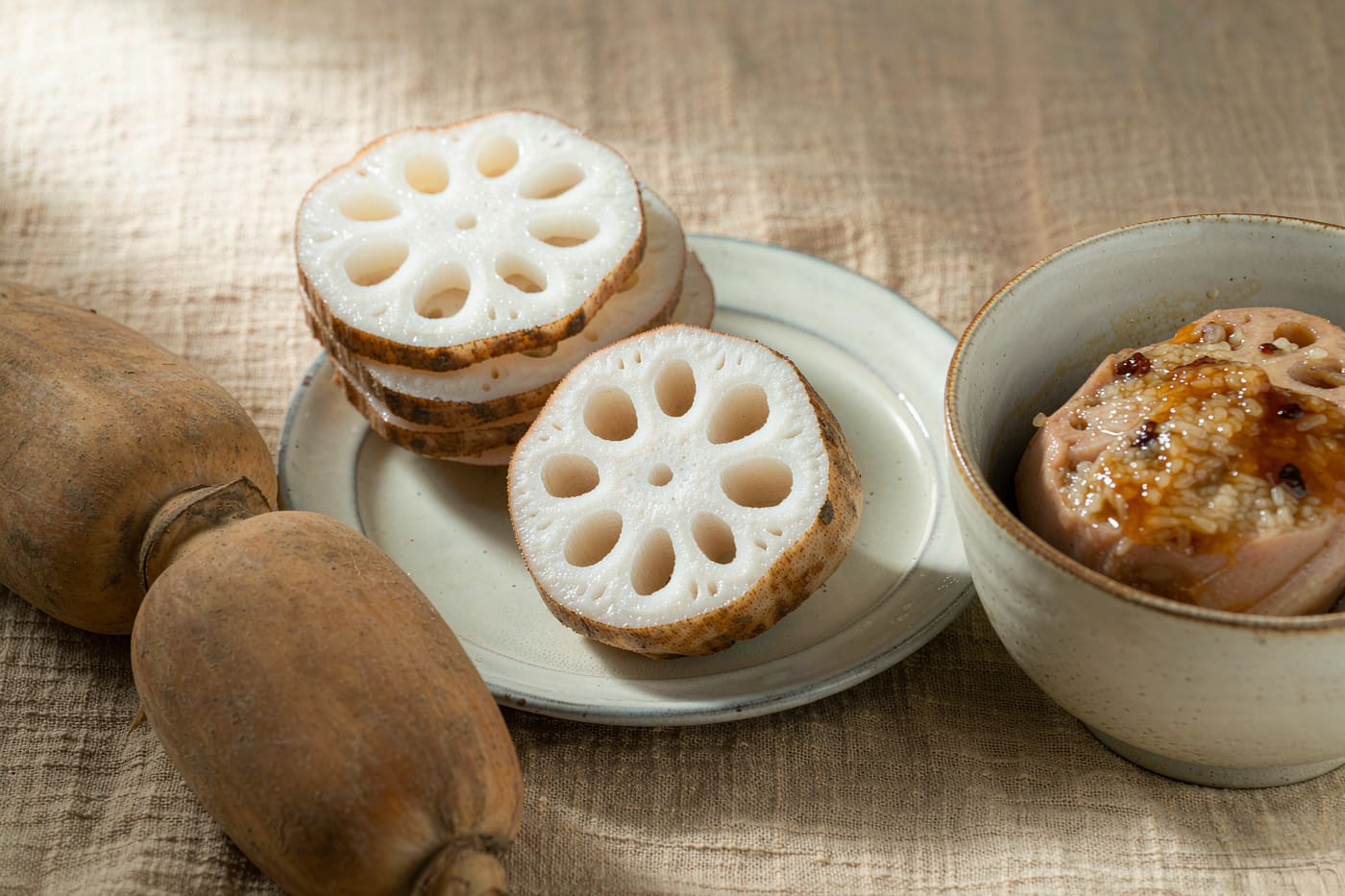
It looks like a barrel of Swiss cheese and eats like a water chestnut with ambition. How to buy lotus root in an American grocery, clean it properly, and cook the two classic ways — crisp and soft.
The first time my spouse encountered lotus root was in a soup at my parents' place, and the conversation afterward was mostly about the holes. Evenly spaced, perfectly round holes running through every slice, like the vegetable had been drilled by someone with a template and infinite patience.
Here is the thing about lotus root that no one tells you: the holes are not decorative. The lotus grows in mud at the bottom of ponds, and the root is its snorkel — a series of air channels running the length of the plant. Every slice of lotus root on a dinner table is a cross-section of plumbing. I find this improves the eating experience, the same way knowing how a watch works improves looking at one.
The two personalities of one vegetable
Lotus root is the only vegetable I know with two genuinely distinct finished forms, and Chinese cooking takes advantage of both:
The crisp version. Sliced thin and briefly stir-fried, or blanched and dressed cold, lotus root snaps like the best water chestnut you have ever had, with a mild sweetness underneath. The classic is stir-fried with wood ear mushrooms and scallion, or simply dressed with vinegar and a little chili. The whole game is cooking it as little as possible.
The soft version. Simmered for an hour in soup, or stuffed with sticky rice and steamed for hours more, it transforms completely — dense, starchy, faintly sweet, closer to a chestnut than a vegetable. My family's winter soup is lotus root with pork ribs, where the root absorbs the broth and becomes the part everyone stabs each other with chopsticks over.
Same vegetable. The difference is time and heat, and knowing which one you want before you start.
Buying and cleaning, the practical version
In American Asian groceries, lotus root usually appears as whole roots — tan, segmented, like fat sausages linked end to end. (Sometimes vacuum-packed slices, which are fine for soup and acceptable for stir-fry.)
Choose heavy. Pick up two similar-sized pieces; the denser one is fresher and starchier. Avoid anything with dark, soft patches at the cut ends — that is oxidation working its way in — and any cracked skin.
Cleaning is the real skill. Between those air channels, mud genuinely lodges. Peel first, then slice, then soak the slices in cold water with a splash of vinegar while you work — this keeps them snow-white instead of turning the color of an old coin. For stir-fry, some cooks rinse the cut slices and shake them dry; the vinegar soak handles both color and any residual grit.
Recipe one: the crisp stir-fry (15 minutes)
Slices a quarter-inch thick, stir-fried hot and fast with wood ears (soaked, torn), scallion, a splash of Shaoxing wine, salt. In and out of the wok in three minutes — the moment the slices turn from opaque to glassy, they are done. Overcooked crisp lotus root is just sad soft lotus root that missed its calling.
Recipe two: the soup (90 minutes, mostly unattended)
Pork ribs blanched, lotus root cut into fat rolling chunks — chunks, not slices, this is the texture upgrade — covered with water, simmered with a couple of ginger slices and nothing else until the broth turns milky-pale and the root gives when pressed. Salt at the end. This is the January version, the one that made the vegetable famous in my house. (An inert pot matters here — cast iron meets lotus root tannins and everything goes gray. Learned that one the expensive way.)
For the ambitious: the sticky rice stuffed version — lotus root sections filled grain by grain with glutinous rice, simmered for hours with rock sugar and that same aged tangerine peel from my other guide, then sliced to show a honeycomb of rice in every hole. It is a festival dish, and it is exactly as labor-intensive as it sounds, which is the point.
Why it earns its place
There is a category of Chinese ingredients that the internet treats as exotic challenges, and lotus root sometimes gets filed there. I would file it differently: it is a reliable, affordable vegetable with a better texture range than a potato and a better personality than a zucchini, and it asks only that you own an Asian grocery run in your monthly rotation. Start with the soup in cold weather, the stir-fry in warm ones, and let the holes be a bonus.
Frequently asked questions
What does lotus root taste like?
Mild and slightly sweet, with a texture that depends on cooking: raw or briefly stir-fried it is crisp like a water chestnut; long-braised or steamed it turns dense and starchy, closer to a sweet potato.
Where do I find lotus root in the US?
Asian groceries carry it year-round — whole roots in the produce cooler, sometimes vacuum-packed pre-sliced. Choose heavy pieces that feel dense for their size, with unbroken skin and no dark discoloration at the cut ends.
Why did my lotus root soup turn gray?
The starch oxidizes. Soak cut slices in water with a splash of vinegar while you work, and use an inert pot — cast iron reacts with the tannins and darkens the soup. The flavor survives a little gray, but the look does not.
About the author
Writer & Home Cook
Chinese home cook writing about seasonal food traditions from an American kitchen. Grew up in Guangdong, now cooks for a mixed family in the US.
Keep simmering
Ingredient Guides
Dried Tangerine Peel: The Citrus That Ages Like Leather
Chenpi is one of the only ingredients in a Chinese kitchen that gets more valuable with time — decades, sometimes. What it is, why old peel is prized, and how to buy and use it in an American kitchen.
Jack Chen · Nov 1, 2026 · 4 min read
Ingredient Guides
Ginger Scallion Oil: The Three-Ingredient Condiment That Runs a Cantonese Kitchen
Jiang cong you is not a recipe so much as a kitchen institution — poured over steamed fish, tossed with noodles, spooned over plain rice. The version I make weekly, and the mistakes I made for years.
Jack Chen · Oct 31, 2026 · 3 min read
Ingredient Guides
What a Chinese Pantry Actually Holds: A Shopping List for American Kitchens
Skip the novelty of a 40-ingredient haul. This is the honest list — twelve ingredients that cover 90 percent of what a Cantonese home kitchen actually reaches for, with what they do and where to find them.
Jack Chen · Oct 27, 2026 · 4 min read
This article shares food culture and personal experience. It is not medical advice. See our medical disclaimer.