Why Chinese Kitchens Steam a Whole Pear With Rock Sugar
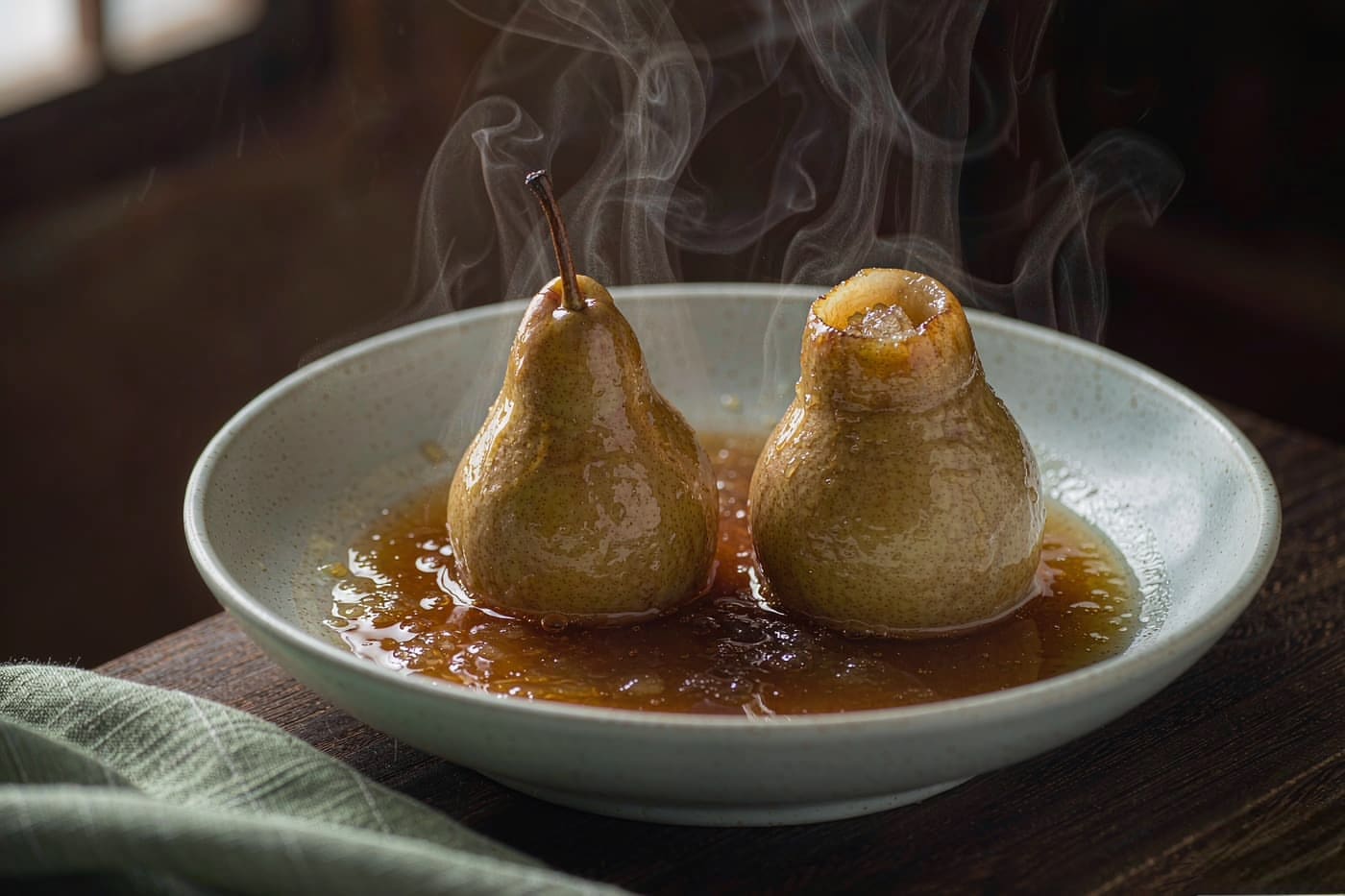
Chuanbei steamed pear shows up in Chinese homes every dry autumn. Here is what the dish actually is, what it is not, and how to make a small, honest version of it.
Every autumn, around the time the air in my childhood apartment turned dry enough to make the wooden drawer sticks squeal, my grandmother would put a whole pear in a bowl and steam it for what felt like half a day.
The pear came out soft, translucent, swimming in a shallow pool of amber syrup. You ate it warm, with a spoon, hollowing it out like a little edible bowl. She served it the way other families serve ice cream when a kid is sad: without explanation, without ceremony, and always on the day you needed it.
If you have heard of this dish in English, you have probably heard a much stronger version of the story — that it is a "remedy", that it "heals the lungs", usually followed by someone selling you a bag of dried bulbs. I want to write down the version I actually lived, and then give you a recipe that works in an American kitchen. I also want to be explicit about what I will not claim, because the honesty is part of the dish.
What the dish is called, and what is in it
The classic version is chuanbei steamed pear: an Asian pear, cored from the top like a jack-o'-lantern, filled with rock sugar and often a pinch of chuanbei — a dried bulb from the traditional Chinese pharmacy that smells faintly like a forest floor. The pear steams in its own juice for an hour or three, until the flesh turns glassy.
Chuanbei is genuinely a medicinal ingredient, dispensed by herbalists, and I am deliberately leaving it out of this recipe. Partly because I am a food writer and not an herbalist, and partly because the two-ingredient version — pear and rock sugar — is what my family ate most weeks anyway. It is a dessert that became a ritual.
What my grandmother actually said about it
Here is the whole speech, translated: "Dry weather. Eat the pear."
That was it. No talk of lungs, no dosing schedule. In her kitchen, the connection between autumn dryness and steamed fruit lived at the level of habit, not theory — the same place as "drink hot water" and "wear a vest". She served it when the air was dry and someone in the house sounded scratchy, and it was, above all, warm, sweet and soft, which are three things that feel good to eat whenever you feel rough around the edges.
I write about food traditions on this site, and I have a rule about them: I will tell you what people eat and when, and I will not tell you it treats anything. Steamed pear is comfort food with a beautiful story. That is exactly what I am claiming here, and all I need to.
The version I make now
Serves 2. One hour, mostly unattended.
- 2 Bosc pears (Bosc hold their shape when steamed; Anjou collapse into sauce, which is delicious but not the dish)
- 1 tablespoon rock sugar per pear — regular sugar works, but rock sugar melts into a rounder, cleaner syrup; find it in any Asian grocery, in yellow lumps the size of walnuts
- 1/2 cup water, plus more for the steamer
Peel just the top third of each pear — this is the classic look, pale shoulders over unbroken skin. Slice off a lid, core it with a melon baller or a sturdy teaspoon, leaving the bottom intact. Fill each cavity with the rock sugar, put the lid back on, and stand the pears in a shallow heatproof bowl.
Steam, covered, over gently bubbling water for 45–60 minutes. The pear is done when its shoulders look translucent and a spoonful of flesh offers no argument. Serve warm, in the bowl it steamed in, with the syrup pooled around it.
Two honest notes from my kitchen
First: I have made this in the oven (tucked into a covered dish at 300°F for the same time) and it works, but steaming is better — the syrup stays clear instead of caramelizing.
Second: the first time I served this to my American spouse, they asked why we didn't just eat a pear. The answer is that we did, most days. But some days the kitchen wanted to say something more than that, and a pear steamed for an hour in its own sugar says it. That is what ritual food is for, and you do not need to believe anything in particular to sit down to it.
Frequently asked questions
Is steamed pear a remedy for coughs?
It is a traditional comfort food often served in dry weather, and many families connect it with feeling better — but it is not medicine and we do not make health claims. We write about it as food and culture.
What pear works best?
Asian pears (also sold as apple pears) hold their shape when steamed and stay crisp-sweet. Bosc pears are the best Western substitute; avoid Anjou or Bartlett, which collapse.
What is chuanbei, and can I skip it?
Chuanbei is a dried bulb from traditional Chinese medicine, sold in Asian herb shops. This recipe deliberately skips it — the dish works as a simple dessert with just pear and rock sugar.
About the author
Writer & Home Cook
Chinese home cook writing about seasonal food traditions from an American kitchen. Grew up in Guangdong, now cooks for a mixed family in the US.
Keep simmering
Seasonal Recipes
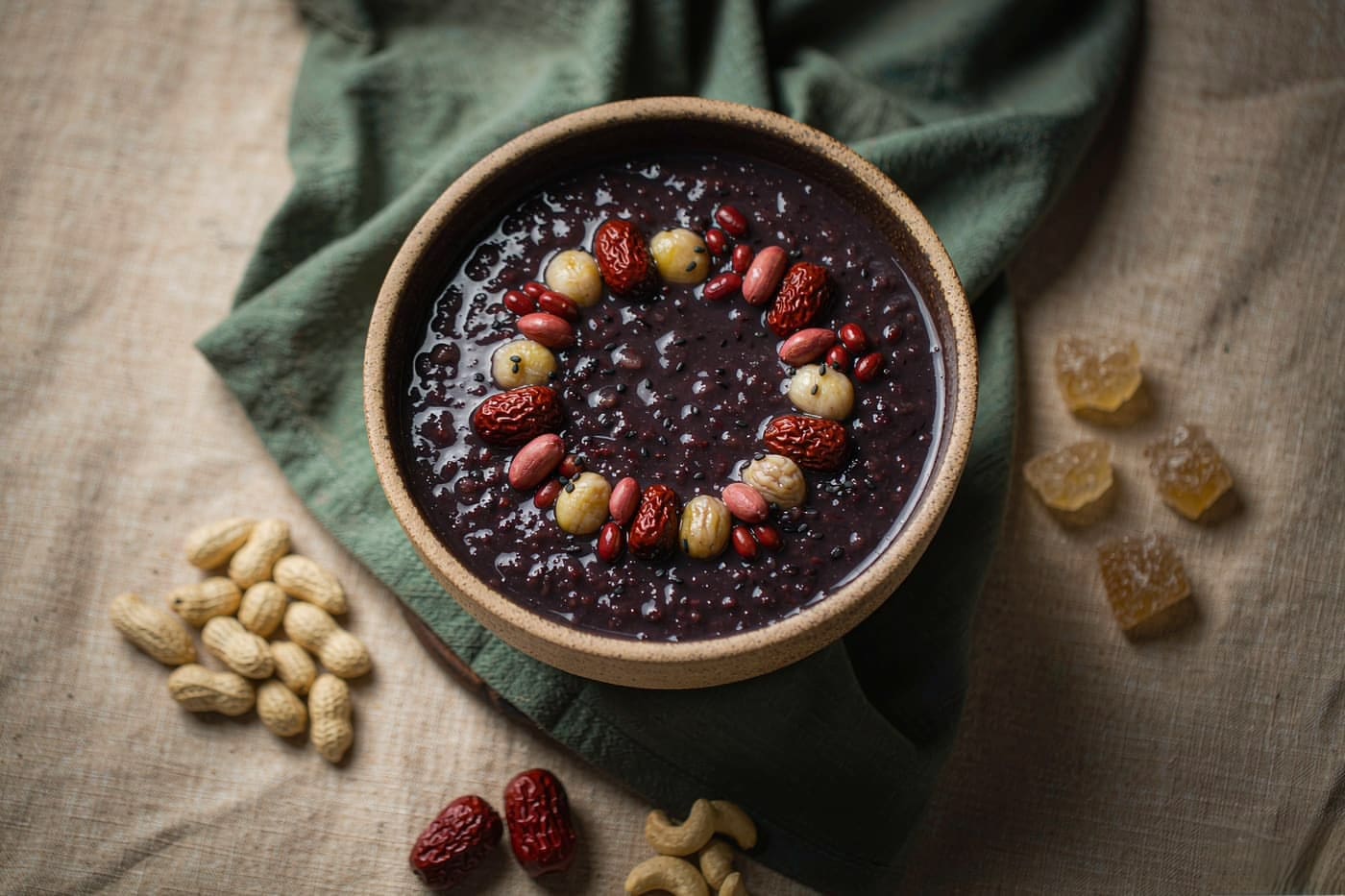
Eight-Treasure Congee: The Breakfast My Family Eats When the Frost Comes
Ba bao zhou is the breakfast that marks late autumn in a Chinese kitchen. Here is how to make it with American supermarket ingredients — and why it belongs to the season, not the menu.
Jack Chen · Nov 3, 2026 · 4 min read
Seasonal Recipes
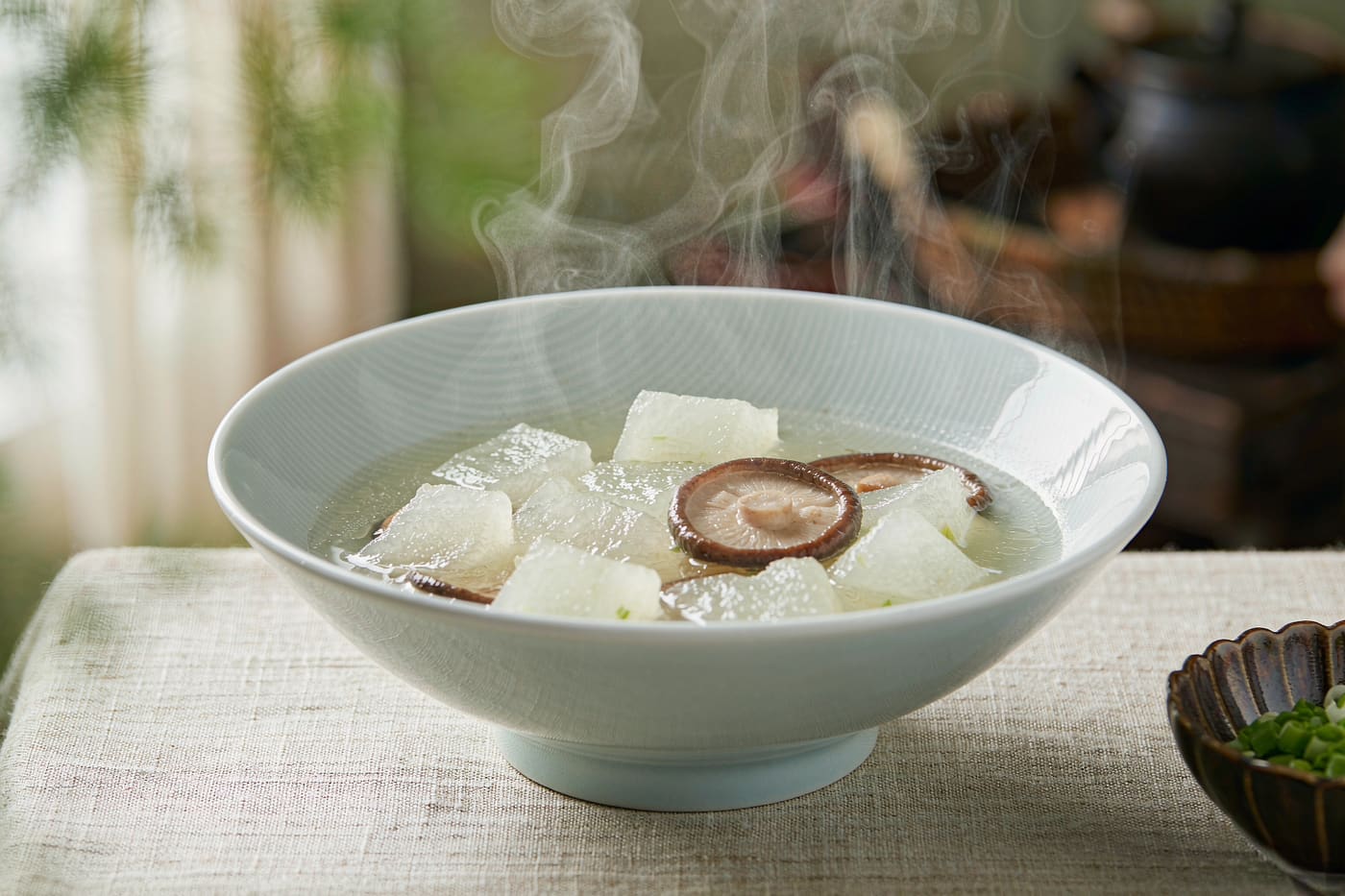
Winter Melon Soup: The Lightest Pot in a Cantonese Kitchen
When the summer heat peaks, Cantonese kitchens swing the other way — to a soup so light it is almost a suggestion. How to make it with American market melons, and why the lightest dish takes the most restraint.
Jack Chen · Nov 2, 2026 · 4 min read
This article shares food culture and personal experience. It is not medical advice. See our medical disclaimer.